PE-22-28
Cognitive & neuro Research only Animal studies only
Also called Spadin analogue
A seven-amino-acid peptide designed from the breakdown products of spadin, a longer peptide that acts as a fast antidepressant in animals. It blocks TREK-1, a potassium channel in neurons that appears to set the pace of antidepressant response.
Evidence at a glance
- Evidence
- Animal studies — Not yet studied in people
- Status
- Research compound only
- Dosing
- No human study has set a dose
Mouse behavioural models only. No human has been given this peptide in a published trial, and antidepressant effects in mice have a poor record of translating.
What studies report
- Blocks the TREK-1 potassium channel, with higher affinity and longer action than spadin itself in mouse work
- Antidepressant-like behaviour in mice within days rather than the weeks conventional drugs take
- More neurogenesis and more synapse formation in mouse hippocampus
How it works
Blocks TREK-1, a two-pore potassium channel. Mice bred without TREK-1 are resistant to depression-like states, which is the reasoning behind blocking it chemically. Blocking it also appears to increase the birth of new neurons.
Where it acts
 Brain
The library groups this compound under Cognitive & neuro. The diagram shows that target, not every tissue it reaches.
Illustrated
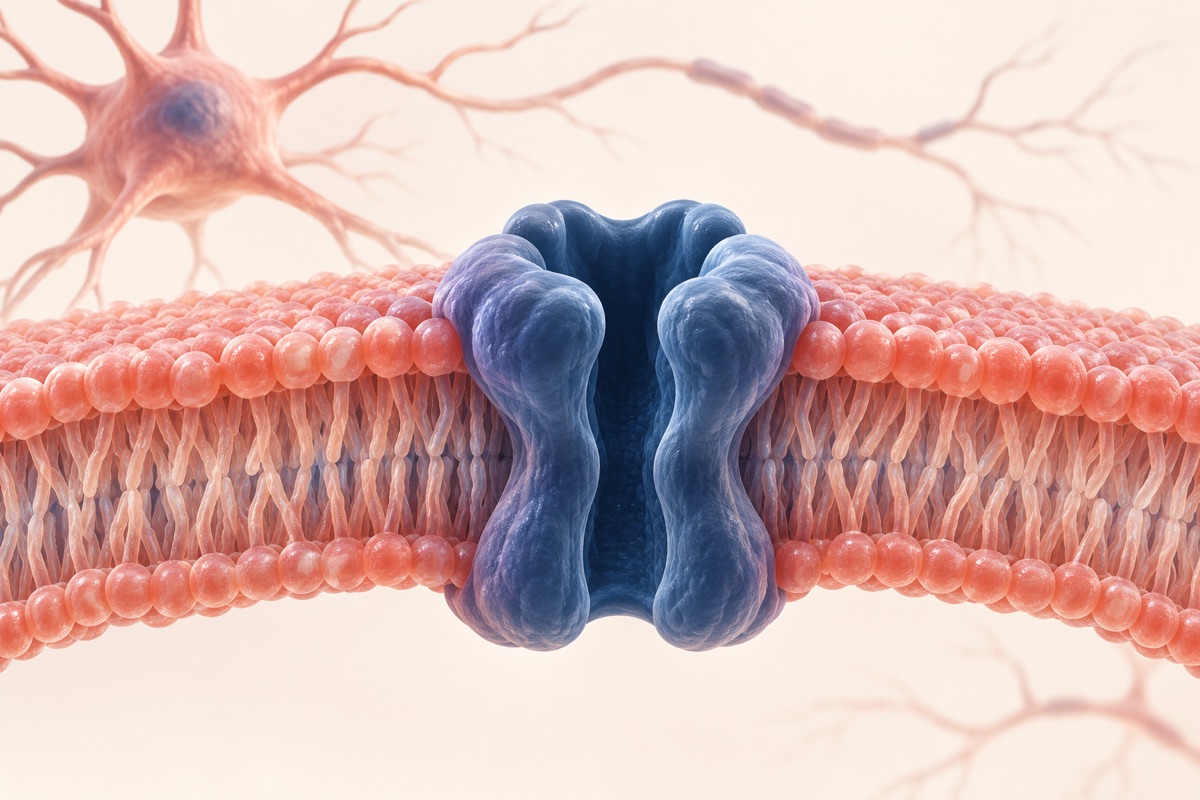
AI-generated subject illustration; not a depiction of the compound or evidence of its effects.
Why people take it
Reasons people seek it out — not a list of proven effects.
In practice Unapproved use
- Occasionally used intranasally for mood by people already using Semax and Selank
- Very thin community presence compared with the other neuro peptides here
Science hasn't caught up: There is no human dosing experience to draw on at all, and the compound targets a channel involved in mood regulation.
Reported real-world use, not evidence and not a recommendation.
Status: Preclinical research compound. Not approved anywhere.
- Route
- Intranasal or subcutaneous injection in reported use
- Sequence
- Gly-Val-Ser-Trp-Gly-Leu-Arg
- Molecular weight
- 773.9 g/mol
- Available as
- 5 mg, 10 mg
Search PubMed for PE-22-28 → We link a live search rather than a fixed citation list, so it stays current and nothing here is a reference we have not checked.
Educational information only. Nothing here is medical advice, a dosing protocol, or a recommendation to use any compound. Most entries describe substances not approved for human use. Talk to a licensed clinician before acting on anything you read here. How to read these entries.