Retatrutide
Metabolic In trials Human trials
Also called LY3437943, Triple G
A triple agonist — GIP, GLP-1 and glucagon receptors together. Adding glucagon is the novel part: it raises energy expenditure rather than only reducing intake. Phase 2 produced the largest weight loss yet reported for a drug of this kind.
Evidence at a glance
- Evidence
- Human trials — Studied in people
- Status
- Reached clinical trials
- Dosing
- A dose has been tested in humans
Not approved anywhere. Glucagon receptor activation raises heart rate more than the dual agonists do, and the long-term consequence of that is unknown. Everything currently sold is unapproved material of unverified identity, bought on the basis of one phase 2 trial.
What studies report
- Around 24% mean body weight loss at 12 mg over 48 weeks in phase 2 — the highest reported for this class
- No weight-loss plateau by 48 weeks, unlike most trials of this kind
- Substantial reductions in liver fat in people with fatty liver disease
- Phase 3 trials are ongoing
How it works
Agonist at three receptors at once. GLP-1 and GIP suppress appetite and improve insulin handling; glucagon receptor activation increases energy expenditure and drives hepatic fat breakdown — the combination attacks both sides of the energy balance.
Where it acts
 Pancreas
The library groups this compound under Metabolic. The diagram shows that target, not every tissue it reaches.
Illustrated
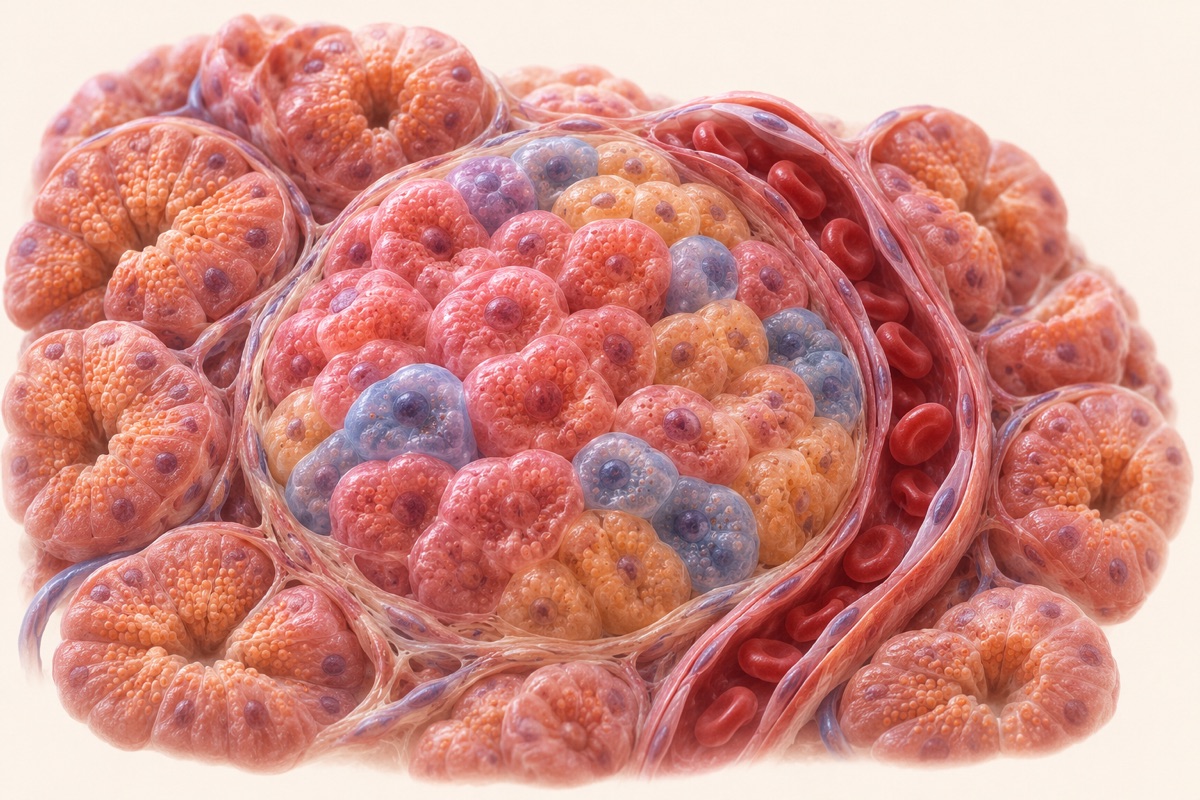
AI-generated subject illustration; not a depiction of the compound or evidence of its effects.
Why people take it
Reasons people seek it out — not a list of proven effects.
In practice Unapproved use
- Already widely sold by research-chemical vendors despite being years from approval
- Attracts people who have plateaued on semaglutide or tirzepatide
Science hasn't caught up: Phase 2 results are genuinely striking, but phase 2 is where many drugs look best. Phase 3 has not reported, and people are buying unregulated versions on the strength of a single trial.
Reported real-world use, not evidence and not a recommendation.
Dosing
What was tested Evidence
- 12 mg weekly, subcutaneous48 weeksPhase 2 obesity trial (n=338)→ −24.2% body weight; the curve had not flattened
- 8–12 mg weekly, subcutaneous24 weeksPhase 2 in type 2 diabetes→ HbA1c and weight reductions exceeding comparators
What people report using Not evidence
- Circulating as a research chemical well ahead of approval, typically dosed in imitation of the trial schedule
Reported for reference, not as instruction. Nothing here is a recommendation to take anything, and most of these compounds are not approved for human use.
Status: Phase 3 trials ongoing. Not approved.
- Route
- Subcutaneous injection, weekly
- CAS
- 2381089-83-2
- Available as
- Compounded vials
Search PubMed for Retatrutide → We link a live search rather than a fixed citation list, so it stays current and nothing here is a reference we have not checked.
Compared with
Side-by-side pages for the compounds this one is most often confused with or taken alongside.
Educational information only. Nothing here is medical advice, a dosing protocol, or a recommendation to use any compound. Most entries describe substances not approved for human use. Talk to a licensed clinician before acting on anything you read here. How to read these entries.